
In 2015, I did my first mountain summit. It was a double-summit on a 20-mile loop, earning me the top of both Mt. Marcy and Algonquin, in the Adirondacks.
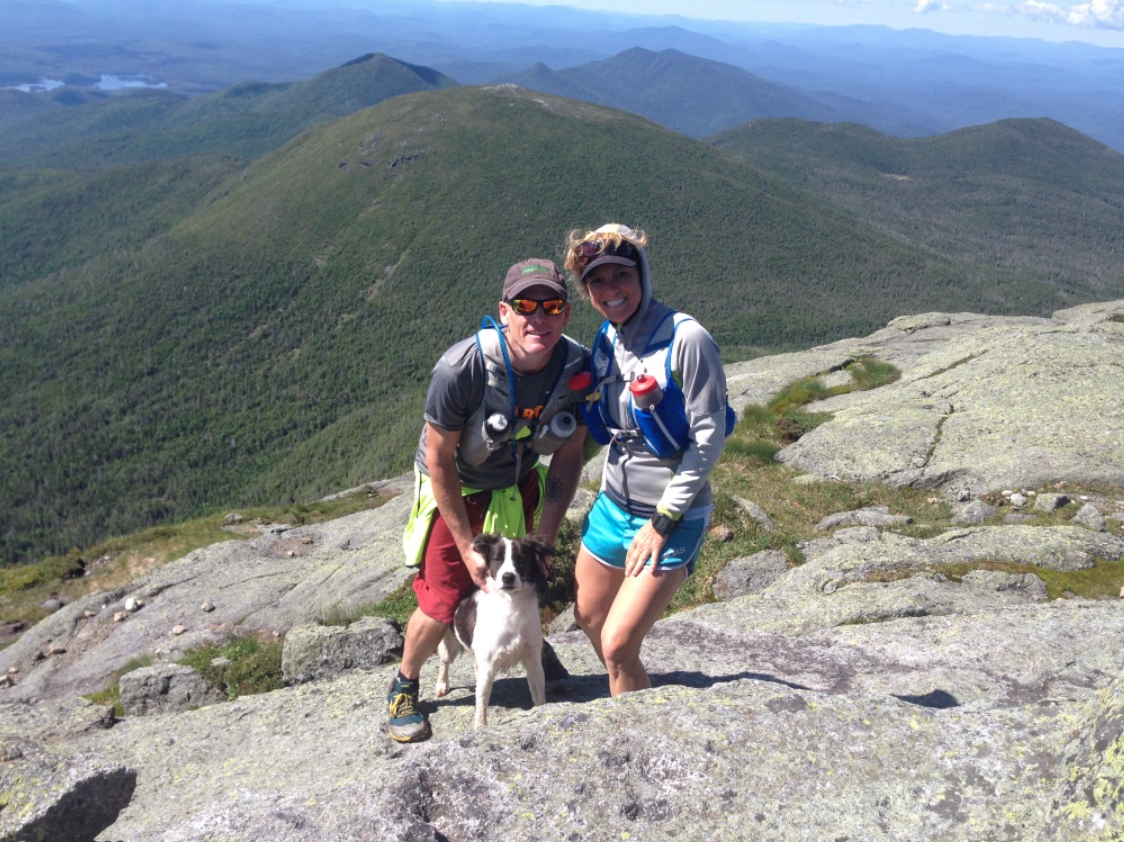
Above: The top of Mt. Marcy, with my husband John & our dog Pace, who at the time was a young pup. She now has more mountain experience than I do!
It. Was. Hard.
I had run plenty of marathons and ultramarathons, but I had never done anything like that. I was sore for well over a week as a consequence of my lack of mountain-specific fitness and strength. Since that day, I’ve been so lucky to find my way to the top of many peaks. Each summit is a unique encounter with its own special story – even if I’ve been on that peak before.
Mountains are unique creatures, immobile and yet constantly changing. They are brutal yet careful teachers. They are a place of play, and yet ultimately a very serious domain. In the past 10 years, mountains have become my playground of choice.
I’ve learned much from these majestic queens, with nearly 50 summits across various mountain ranges. Most recently, I climbed Mt. Princeton, which was my 23rd unique summit of a 14er. (A 14er is a mountain that is at least 14,000 feet tall. In the United States, there are a total of 96 14ers, and Colorado has the lion’s share of these beauties, with 58 peaks.)
During this hike, I got to thinking about the lessons these mountains have taught me, especially since Princeton took me 3 tries to get to the top. As with many things in life, a summit is never a guarantee – just like a finish line or an anticipated race result.
In this article, I’d like to share four of the key lessons mountains have taught me, and how these lessons can apply to any endurance sport and to your life.
Experience Matters
My first mountain summits in the Adirondacks felt like a walloping. They were hard and scary, and then they got scarier and even harder. I was fearful of the climbs and the exposure. I was uncertain how to scale big slabs of granite – and even worse, how to get back down.
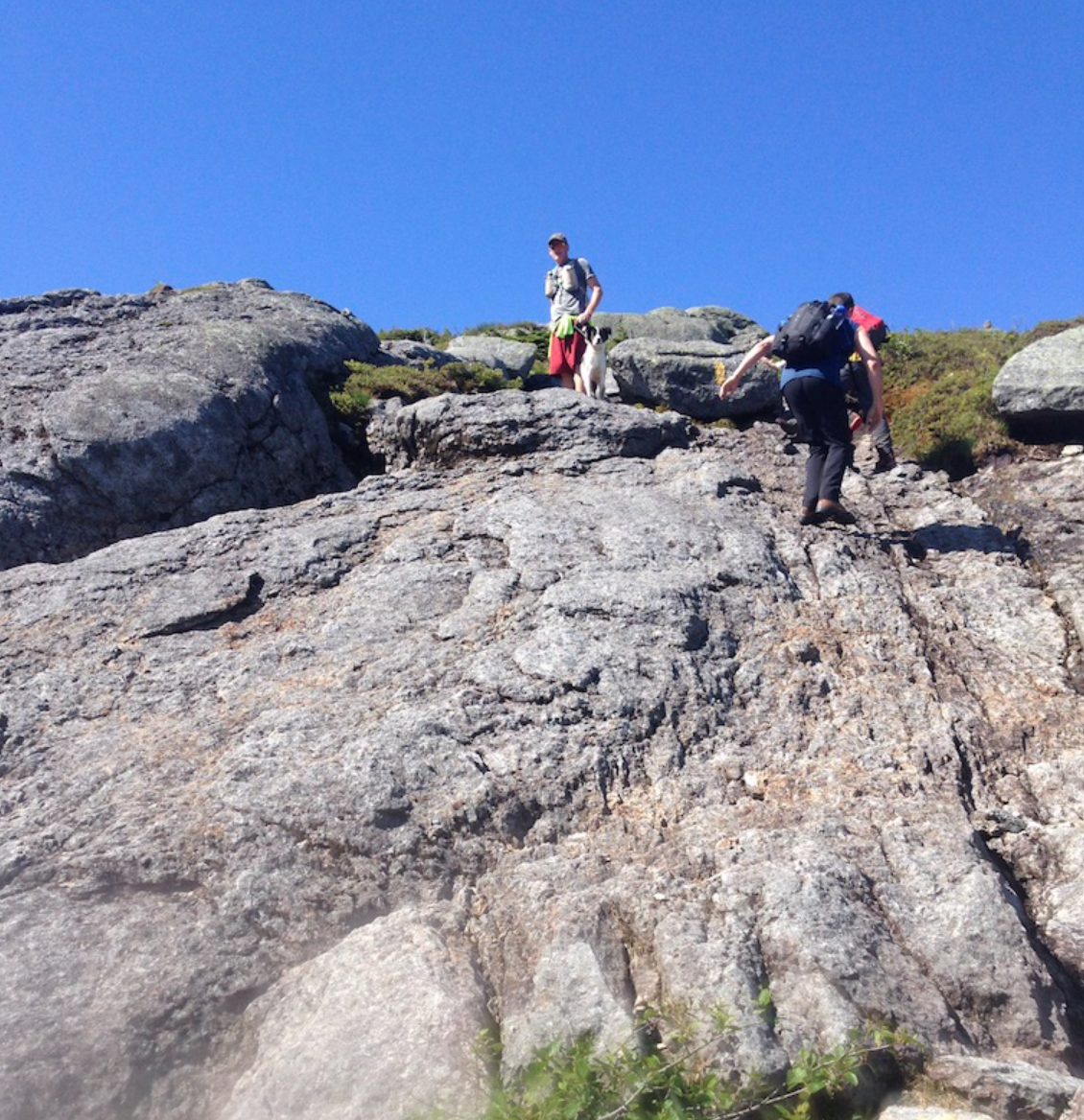
I’m supposed to go UP THERE?
The first time I tried to summit Mt. Princeton, I had almost no experience in climbing 14ers. While I had climbed quite a few of the peaks in Vermont and the Adirondacks, many of these gray ladies out west are a slightly different beast. This lack of experience ultimately led to a failed attempt. I needed to take a few more little steps before taking the bigger steps.
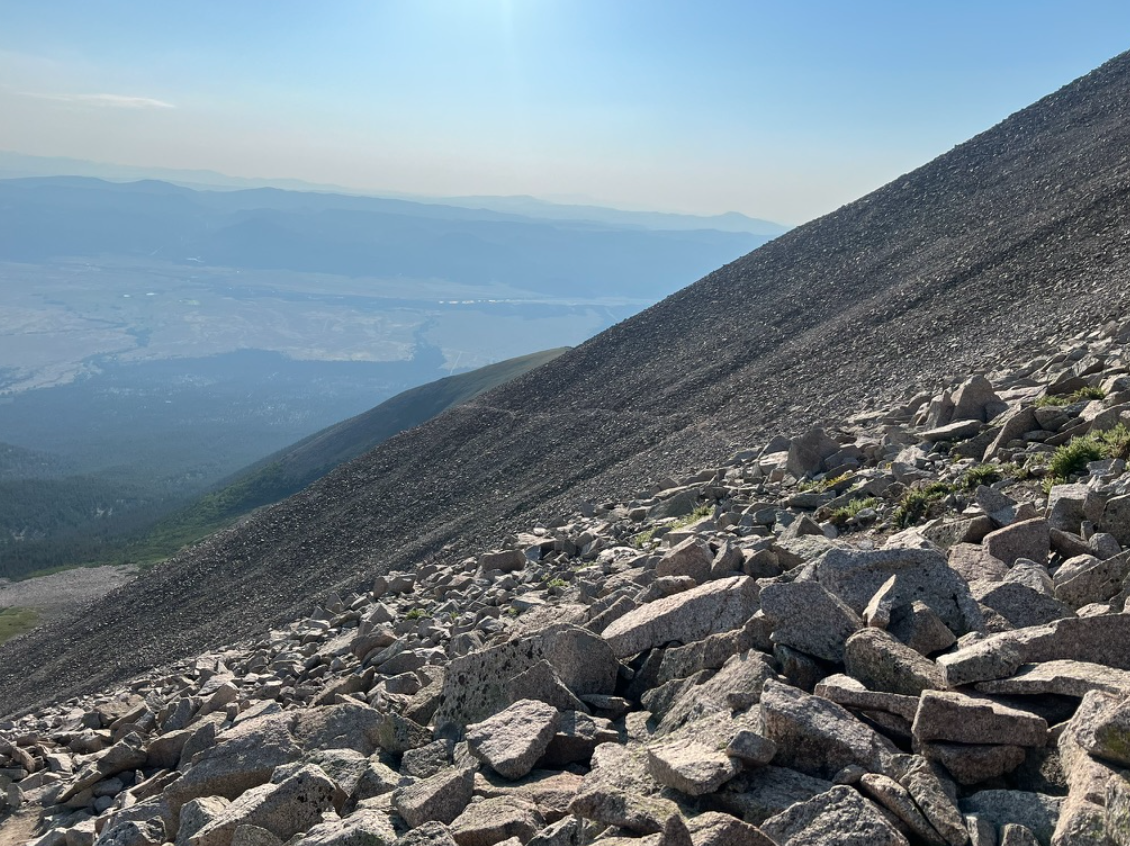
The “trail” on the way to Mt. Princeton is an exposed rockfall.
With more experience, I’ve become much less fearful. I understand more about how the rock feels underfoot – when it is stable, when it is not. I respond to high exposure differently. Countless stream crossings have honed my ability to navigate these tricky obstacles with confidence and agility.
All of those improvements come from experience and experience only. I can read as many books as I want about climbing. I can watch even more videos. But neither the books nor the videos can replace actual lived experience. If we want to truly know, we have to get out there and do.
The same can be said for any endurance sport endeavor. When we first start swimming, cycling, or running, the challenges appear wide, deep, constant, and varied. But, as we gain experience, we develop fitness, technical ability, and confidence. For the latter, this is where experience really matters.
Simply put: the more we do something, the better we get at it. So, when you have a goal for a big event, ensure that you leave enough time between the athlete you are today and the athlete you need to be tomorrow. Set up your calendar to allow for event-specific races or training that will give you the experience you need to be successful on “thee” big day.
Preparation is Vital
If you don’t prepare for variable and changing conditions in the mountains, you could wind up severely injured or dead. We read reports all the time about people who go missing out here. Nothing can completely erase the risks inherent in mountain sport. But, without preparation, we greatly increase the chance that something will almost certainly go wrong.
And, so it goes for any endurance sport. We might face extreme cold or heat, severe weather, wildfire smoke, sea creatures, highly technical and exposed terrain, and [insert the extreme weather or terrain you’ve had to manage or will have to manage here]. As a coach, I review course reports, elevation profiles, terrain descriptions, and more to help my athletes prepare for the expected. And then we need to prepare for what might not be expected.
This preparation includes physical training, of course. We train for exertion, skills, terrain, and conditions, and any other curveballs that race day may send us. This preparation goes beyond the physical, however. We need to carefully consider our gear choices, such as clothing and equipment. For example, being ready for a colder event means testing clothing options for what is breathable yet warm. In cycling, we need to understand what sorts of gearing works best for flat or hilly terrain. Gear choices depend upon the sport, time of year, and our experience.
Physical preparation doesn’t count for much if the brain isn’t on board. So, mental preparation is another key element to our success. For example, I am afraid of heights. As you might imagine, this is not a fear that comes in handy for an athlete who loves to participate in mountain sports. So, I do the right work to get my head screwed on straight to manage this fear once triggered. I work diligently to reframe risk and danger, and to flip the script when the voices come calling. But, none of that will magically happen on race day if we don’t practice it daily in training.
Fear is Not A Good Excuse
When my husband John and I first moved to Colorado, I told him that I wasn’t going to be climbing mountains and skiing all the time. HAHAHAHAHAHAHAH!!! That story sure has changed.
When we first moved, all I wanted to do was run the thousands of miles of glorious trails that stretched everywhere. Over time, I was more honest with myself that the reason I said I wasn’t going to do mountain sport was because I was afraid to do it.
Sorry friends, but fear simply is not a good excuse.
If someone truly does not want to do something, no problem. I’m not going to pester them. But, if they want to do something, and fear is the only thing in the way, well, let’s fix that! Let’s commit to the goal, embrace the fear, and push through it. For me, there is no bigger regret than failing to do something simply because I was scared to start.
Just. Start.
This doesn’t mean we have to jump right to the big, hairy, audacious, scary thing. Rather, we make a plan for how to gain the necessary experience, make the appropriate preparations in gear, body, and mind, and then we get after that plan with everything we’ve got.
Take A Look Around
As the infamous Ferris Bueller said, “Life moves pretty fast. If you don’t stop and look around once in a while, you could miss it.”
This may be one of the most important lessons I’ve learned from the summit: it’s okay to stop and look around. Spend the time to enjoy the fruits of your labor before moving on to what you have to do next. This is something I wish I could have taught athlete-Maria 10 years ago when she was working to qualify for the Ironman World Championships in Kona. Once athlete-Maria got to the big island, she did not take the time to look around. She therefore did not enjoy it the way she could have. Poor athlete-Maria.
Don’t be a dumb-dumb like that younger version of myself. Instead, be sure we celebrate our accomplishments – from the daily wins to the summit-level triumphs. Each of our “summits” has important lessons, moments of profound joy, instances of complete misery, and opportunities to realize just how extraordinary we can be if we let ourselves.
Every athlete has a mountain to climb. With the right preparation, support, and mindset, you can reach the summit—and we can help you get there.
Start your journey with a No Limits coach today. Learn more.

The 2024 Crew on the top of Algonquin. This mountain almost broke me in 2015. In 2024, I returned to the summit with this amazing group of humans, who worked hard, learned much, and celebrated the summit!