
And what do I need to do about it?
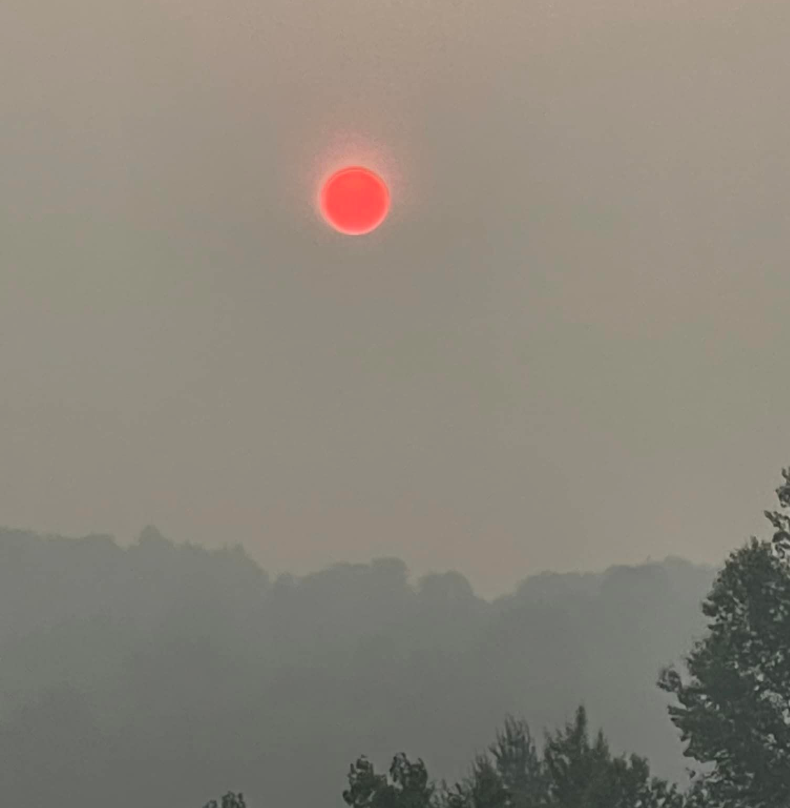
Above: The Sky in Mont Tremblant the morning of the 2023 70.3 race. Suffice to say, the race was a no go as the AQI was well into the Hazardous zone.
I opened my front door to take out the trash, and there were white specks all over our front porch. It was the summer of 2020, and the temperature was 80+ degrees. This can’t be snow, I thought.
It wasn’t. It was ash from a wildfire that was over 150 miles away, in Glenwood Canyon. In addition to the ash on my deck, the air was hazy, and you could smell the faint wisp of smoke. This was my first introduction to the AQI: air quality index. During that summer and the summer of 2021, the air in Colorado hung thick with smoke from the Colorado fires in 2020, and then smoke from fires in California and Oregon in 2021. I spent much of both of these summers indoors, to reduce my exposure to the toxic air.
In 2023, the Canadian Wildfires wrecked havoc with the air – even though they were hundreds of miles away. Many of the team had experienced diminished air quality, as the smoke traveled up and down the Eastern Seaboard, and into the midwest. This smoke impacted races; and even lead to the cancellation of Ironman Mont Tremblant, a disappointing outcome I know all too well, as a race I planned to do in 2021, the Tahoe 200, was canceled due to fire. It’s a hard situation for all involved, but it seems to me that changes in our climate are increasing weather-related disasters and disruptions.
High AQI is the latest to hit our radar. In this article, we’ll focus on what AQI is, and how you can manage your training (and racing) on high AQI days.
What is AQI?
AQI stands for Air Quality Index. You will find an AQI rating on most weather reporting apps. You can also check the AQI, and the breakdown of pollutants that contribute to that AQI, by visiting the EPA’s AirNow website, or download the app.
AQI uses a range of 0 to 500 to report on several pollutants including:
- Particulate matter
- Ozone
- Nitrogen dioxide
- Sulfur dioxide
- Carbon monoxide
The AQI scale uses 6 categories, which are:
- Good – 0-50
- Moderate – 50-100
- Unhealthy for Sensitive Groups – 101-150
- Unhealthy – 151-200
- Very Unhealthy – 201-300
- Hazardous – 301-500
Using this scale, you can make informed decisions about what is smart for you when it comes to training outdoors.
Above: Air Quality in my hometown, Conifer, on July 3, 2023, as reported by the EPA Now website.
Outdoors or Indoors?
Generally speaking, when the AQI is good or moderate, you can head outside to train. If you are sensitive to some of the pollutants (or allergens), you may need to adjust training outside even in moderate ratings. Just as some sorts of pollen may bother some of us more than others, some of the pollutants in the AQI ratings may trigger issues for some, but not others.
If you are sensitive to pollution and/or you have a respiratory condition, such as asthma, the air quality becomes unsafe when it sits in the 101-150 range. Even if you aren’t in this category, you will likely notice impacts to your performance when the AQI hits this range. I have asthma, and so will be unlikely to do any substantive training outside once the air quality gets into this range.
Once the AQI gets to 151, the air becomes unhealthy for most everyone. Those with respiratory issues should head inside for training. And, even if you don’t have health concerns, you may want to consider training inside, as this range risks issues with performance and recovery.
Once the AQI hits 201 or above, everyone should head inside. It is also smart to keep windows and doors closed, use an air filter, and take note of any symptoms such as coughing, shortness of breath or chest pain. If necessary, wear a mask to filter some of the worst of the pollutants from hitting your lungs.
Health Risks
If you choose to train outside when the AQI rises, you may wonder what the actual health risks are. Repeated bouts of training in higher AQI have been correlated with health problems such as asthma attacks, bronchitis, lung cancer (long term exposure), heart disease, and stroke. Less serious risks will include coughing, chest tightness and impacts to your performance in a workout as well as recovery from that workout.
On the positive side, the AQI in the United States generally has improved since the 1970s. In 1970, the average AQI in the US was 80. In 2020, it was 58. This reduction in AQI is thanks to air pollution regulations, cleaner fuels, and improved technology.
That being said, AQI is often worse in the summer than it is in the cooler months, due to warmer temperatures, more sunlight (which increases ground level ozone, which is a significant issue here in Colorado), wildfires, and storms. As such, we do well to check the air quality before we head out. And, when in doubt, stay indoors to keep your lungs happy and healthy.
Not sure how to adjust your training when weather, heat, or air quality changes?
One of the benefits of having a coach is knowing when to push and when to adapt. We help athletes make smart training decisions so they can stay healthy and continue making progress, no matter what Mother Nature throws their way.
Learn more about our coaching services or schedule a free consultation to see if we’re the right fit for your goals.